


超聲波清洗機是如何工作的
作者:創(chuàng)始人來源:http://m.heqingliang.cn/時間:2025-08-09
超聲波清洗機的發(fā)展歷史
The Development History of Ultrasonic Cleaning Machines
超聲波清洗機的發(fā)展歷史可以追溯到20世紀初,自1880年居里兄弟發(fā)現(xiàn)壓電效應以來,壓電學成為現(xiàn)代科學與技術(shù)的一個重要領(lǐng)域。然而,壓電換能器最早應用于工程是僅作為濾波器件的石英晶體諧振器,而壓電效應在工程中應用也只局限于水聲和電聲器件。
The development history of ultrasonic cleaning machines can be traced back to the early 20th century. Since the discovery of the piezoelectric effect by the Curie brothers in 1880, piezoelectricity has become an important field of modern science and technology. However, the earliest application of piezoelectric transducers in engineering was only as quartz crystal resonators as filtering devices, and the application of piezoelectric effects in engineering was also limited to underwater and electroacoustic devices.
在第一次世界大戰(zhàn)期間,法國著名物理學家保羅·朗之萬發(fā)明了“鋼-石英-鋼”結(jié)構(gòu)的夾心壓電換能器,并成功地在水中進行了發(fā)射和接收超聲波的實驗,這是人類首次對超聲波技術(shù)的應用展開研究。
During World War I, the famous French physicist Paul Langevin invented a sandwich piezoelectric transducer with a "steel quartz steel" structure and successfully conducted experiments on transmitting and receiving ultrasonic waves in water. This was the first time that humans had conducted research on the application of ultrasonic technology.
然而,真正的超聲波清洗技術(shù)研究始于20世紀50年代,當時H.B.Miller對換能器做出了巨大改進,發(fā)展了加預應力的復合換能器,為功率超聲波技術(shù)的工業(yè)應用奠定了基礎(chǔ)。在這一時期,超聲波清洗技術(shù)主要應用于電子、光學和醫(yī)藥等領(lǐng)域。由于其強大的實用性和廣泛的應用范圍,從大型機械零部件到小型半導體器件等的清洗,久而久之被俗稱為“無刷清洗”。
However, the real research on ultrasonic cleaning technology began in the 1950s, when H.B. Miller made significant improvements to transducers and developed pre-stressed composite transducers, laying the foundation for the industrial application of power ultrasonic technology. During this period, ultrasonic cleaning technology was mainly applied in fields such as electronics, optics, and medicine. Due to its strong practicality and wide range of applications, the cleaning of large mechanical components to small semiconductor devices has gradually become commonly known as "brushless cleaning".
然而,此技術(shù)的廣泛應用并非一帆風順。盡管超聲波清洗機已經(jīng)有了30多年的歷史,日本在25年前就開始使用,但一個誤解一直困擾著這項技術(shù),使人們懷疑超聲波清洗器的效果。
However, the widespread application of this technology has not been smooth sailing. Although ultrasonic cleaning machines have a history of over 30 years and were first used in Japan 25 years ago, a misconception has plagued this technology, leading people to doubt the effectiveness of ultrasonic cleaning machines.
傳統(tǒng)的超聲波清洗器理論認為,氣泡起到了清洗的作用。但科學家經(jīng)過反復試驗發(fā)現(xiàn),事實上,氣泡只是由超聲波的強力粗密波引起的單純的氣體爆發(fā)而已,它反而會抑制甚至消除超聲波清洗器的清洗力,真正發(fā)揮清洗作用的是真空的氣穴。
The traditional ultrasonic cleaner theory holds that bubbles play a cleaning role. But scientists have found through repeated experiments that in fact, bubbles are just simple gas explosions caused by the strong and dense waves of ultrasound. They can actually suppress or even eliminate the cleaning power of ultrasonic cleaners, and the true cleaning effect is the vacuum air pockets.
日本清洗工程研究會創(chuàng)始人柴野佳英在1987年公開發(fā)表了這一超聲波清洗的基本理論,并根據(jù)這一理論研制出了技術(shù)領(lǐng)先的超聲波清洗設(shè)備。
The founder of the Japanese Cleaning Engineering Research Association, Yoshihide Shibano, publicly published the basic theory of ultrasonic cleaning in 1987 and developed a technologically advanced ultrasonic cleaning equipment based on this theory.
隨著應用范圍的擴大和科技的進步,超聲波清洗設(shè)備也在不斷發(fā)展和改進。傳統(tǒng)的超聲波清洗設(shè)備由于自動化程度不高而難以保證零件清洗的均勻性,近年來逐漸出現(xiàn)了自動化程度高、靈活性強的自動化超聲波清洗設(shè)備。
With the expansion of application scope and the advancement of technology, ultrasonic cleaning equipment is also constantly developing and improving. Traditional ultrasonic cleaning equipment is difficult to ensure the uniformity of part cleaning due to its low degree of automation. In recent years, automated ultrasonic cleaning equipment with high degree of automation and strong flexibility has gradually emerged.
如今,超聲波清洗機更是進一步進入到人們的生活中來,幫助清洗一些結(jié)構(gòu)復雜,難以清理的物件。
Nowadays, ultrasonic cleaning machines have further entered people's lives, helping to clean some structurally complex and difficult to clean objects.
超聲波清洗機的工作原理
The working principle of ultrasonic cleaning machine
工作原理上,超聲波清洗機主要是通過換能器將功率超聲頻源的聲能轉(zhuǎn)換成機械振動,通過清洗槽壁將超聲波輻射到槽子中的清洗液。
In terms of working principle, the ultrasonic cleaning machine mainly converts the sound energy of the power ultrasonic frequency source into mechanical vibration through a transducer, and radiates the ultrasonic waves into the cleaning solution in the tank through the cleaning tank wall.
由于受到超聲波的輻射,使槽內(nèi)液體中的微氣泡能夠在聲波的作用下保持振動。這些微氣泡在破裂時會產(chǎn)生強大的沖擊力,從而將污垢和油脂從被清洗物表面及內(nèi)部分離。
Due to the radiation of ultrasonic waves, microbubbles in the liquid inside the tank can maintain vibration under the action of sound waves. These microbubbles generate strong impact force when they rupture, thereby separating dirt and grease from the surface and interior of the cleaned object.
同時,超聲波在清洗液中傳播時會產(chǎn)生正負交變的聲壓,形成射流,沖擊清洗件。并且由于非線性效應會產(chǎn)生聲流和微聲流,而超聲空化在固體和液體界面會產(chǎn)生高速的微射流,所有這些作用能夠破壞污物,除去或削弱邊界污層,增加攪拌、擴散作用,加速可溶性污物的溶解,強化化學清洗劑的清洗作用。
At the same time, when ultrasound propagates in the cleaning solution, it generates positive and negative alternating sound pressure, forming a jet that impacts the cleaning parts. And due to nonlinear effects, acoustic and micro acoustic flows are generated, while ultrasonic cavitation produces high-speed micro jets at the solid and liquid interface. All of these effects can destroy pollutants, remove or weaken boundary pollution layers, increase stirring and diffusion effects, accelerate the dissolution of soluble pollutants, and enhance the cleaning effect of chemical cleaning agents.
具體而言,當液體被利用時,將產(chǎn)生氣泡,并且當液體被壓縮時,氣泡將被壓縮,它會被粉碎和破碎,這便發(fā)生了著名的“超聲波空化效應”。在空化效應中,氣泡閉合的瞬間產(chǎn)生沖擊波,使氣泡周圍產(chǎn)生巨大的壓力(1012-1013pa)及局部調(diào)溫,這種超聲波空化所產(chǎn)生的巨大壓力能破壞不溶性污物而使他們分化于溶液中。同時,蒸汽型空化對污垢的直接反復沖擊也有利于污漬的清除。
Specifically, when a liquid is utilized, bubbles will be generated, and when the liquid is compressed, the bubbles will be compressed, crushed, and broken, resulting in the famous "ultrasonic cavitation effect". In the cavitation effect, a shock wave is generated at the moment when the bubble closes, causing a huge pressure (1012-1013pa) and local temperature regulation around the bubble. The huge pressure generated by ultrasonic cavitation can destroy insoluble pollutants and cause them to differentiate into solution. At the same time, the direct and repeated impact of steam cavitation on dirt is also beneficial for the removal of stains.
此外,超聲波清洗也利用了超聲波在液體中的空化作用、加速度作用及直進流作用對液體和污物直接或間接的作用。這樣可以使污物層分散、乳化、剝離,從而達到清洗目的。
In addition, ultrasonic cleaning also utilizes the cavitation, acceleration, and direct flow effects of ultrasonic waves in liquids to directly or indirectly affect liquids and pollutants. This can disperse, emulsify, and peel off the dirt layer, thereby achieving the purpose of cleaning.
值得一提的是,超聲波清洗機中的換能器起著至關(guān)重要的作用,它是一種能量轉(zhuǎn)換器件。它的主要功能是將輸入的電功率轉(zhuǎn)換成機械功率(即超聲波)再傳遞出去,而自身消耗掉的功率很少(小于10%)。
It is worth mentioning that the transducer in the ultrasonic cleaning machine plays a crucial role as it is an energy conversion device. Its main function is to convert the input electrical power into mechanical power (i.e. ultrasound) and transmit it out, while consuming very little power (less than 10%) on its own.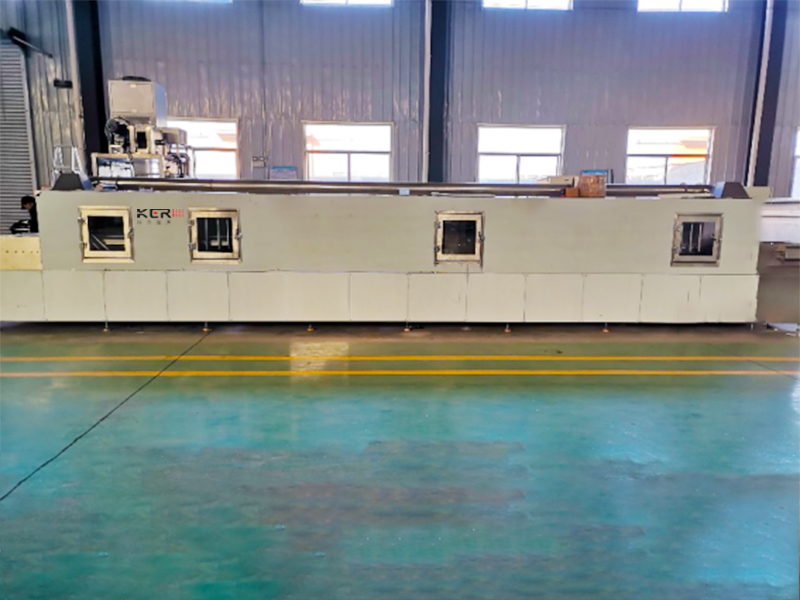
具體來說,換能器將功率超聲頻源的聲能轉(zhuǎn)換成機械振動,通過清洗槽壁將超聲波輻射到槽子中的清洗液。由于受到超聲波的輻射,使槽內(nèi)液體中的微氣泡能夠在聲波的作用下從而保持振動。
Specifically, the transducer converts the sound energy of the power ultrasonic frequency source into mechanical vibration, and radiates the ultrasonic waves into the cleaning solution in the tank through the cleaning tank wall. Due to the radiation of ultrasonic waves, microbubbles in the liquid inside the tank can maintain vibration under the action of sound waves.
當使用超聲波換能器時,最需要考慮的問題是與輸入輸出端的匹配,其次是機械安裝和配合尺寸。此外,換能器產(chǎn)生的振幅極小的高頻震動并傳播到清洗槽中,通過機械能作用將產(chǎn)品的污物清除,提高產(chǎn)品潔凈度。
When using ultrasonic transducers, the most important consideration is the matching with the input and output terminals, followed by mechanical installation and fitting dimensions. In addition, the high-frequency vibration generated by the transducer with extremely small amplitude is transmitted to the cleaning tank, and the product's dirt is removed through mechanical energy, improving the cleanliness of the product.
小結(jié)
Summary
超聲波清洗機通過一種被稱為“空化效應”的原理來清除污漬,而不是利用氣泡。未來隨著技術(shù)的不斷進步和市場需求的不斷增長,超聲波清洗機將會在更多領(lǐng)域得到應用,同時也會更加環(huán)保、高效和智能化。
Ultrasonic cleaning machines use a principle called "cavitation effect" to remove stains, rather than using bubbles. In the future, with the continuous advancement of technology and the growing market demand, ultrasonic cleaning machines will be applied in more fields, while also becoming more environmentally friendly, efficient, and intelligent.
本文由 超聲波清洗機 友情奉獻.更多有關(guān)的知識請點擊 http://m.heqingliang.cn/ 真誠的態(tài)度.為您提供為全面的服務.更多有關(guān)的知識我們將會陸續(xù)向大家奉獻.敬請期待.
This article is a friendly contribution from an ultrasonic cleaning machine For more related knowledge, please click http://m.heqingliang.cn/ Sincere attitude To provide you with comprehensive services We will gradually contribute more relevant knowledge to everyone Coming soon.
相關(guān)產(chǎn)品

相關(guān)文章
-
讀懂COD、TDS、SS數(shù)據(jù),低溫廢水處理設(shè)備選型不踩坑(行業(yè)心得干貨)
-
通過式噴淋清洗機:高壓噴淋如何實現(xiàn)高效除油與批量清洗?
-
單工位旋轉(zhuǎn)噴淋清洗機全解析:高壓噴淋與旋轉(zhuǎn)工裝如何實現(xiàn)高效清潔?
-
低溫廢水回收設(shè)備解決 “安裝難、運維煩、能耗高” 的痛點
-
超聲波清洗機真相揭秘!放進泡騰片會變熟?手伸進去有多難受?一文說透
-
批量清洗封神!2m×1m×1m大內(nèi)槽+18kW功率,單工位旋轉(zhuǎn)噴淋機產(chǎn)能拉滿
-
6槽全自動通過式噴淋清洗機,10寸觸控+全不銹鋼,精密清洗零死角
-
解鎖工業(yè)清洗新效率!噴淋清洗機,搞定零部件油污除銹難題
 常見問題
常見問題推薦產(chǎn)品
推薦文章
 聯(lián)系我們
 公司:濟南科爾超聲波設(shè)備有限公司
  熱線:18663767799
 地址:山東省濟南市濟陽區(qū)創(chuàng)業(yè)路與啟航街交叉口南40米

濟南科爾超聲波設(shè)備有限公司
Jinan Keer ultrasonic equipment Co., Ltd
 咨詢電話:18663767799
 E-MAIL:jnkergs@163.com
 地址:山東省濟南市濟陽區(qū)創(chuàng)業(yè)路與啟航街交叉口南40米
 魯公網(wǎng)安備 37011202001385號

掃一掃,更多精彩